Meetings Calendar

Governor Talk: Thailand - Navigating Macroeconomic Stability and Growth in a Turbulent World

Wednesday, Apr 15, 2026 | 12:45 PM - 01:15 PM

Location: Cedar Hall HQ1-1-660

Governor Talks

OVERVIEW

Thailand has demonstrated resilience amid a highly uncertain global environment, yet it faces mounting economic challenges. Growth has moderated due to long standing structural constraints, while cyclical headwinds are intensifying against a backdrop of heightened geopolitical tensions and the energy price shock induced by the conflict in the Middle East. At the same time, Thailand’s recent election has helped reduce political uncertainty, opening a long awaited window of opportunity to advance reforms needed to strengthen growth and resilience. In this edition of Governor Talks, APD Director Krishna Srinivasan will be joined by Thailand’s Minister of Finance, Ekniti Nitithanprapas, for a fireside discussion on Thailand’s economic outlook and policy priorities. The conversation will explore how the government is responding to higher energy prices, its vision for domestic policies to safeguard macroeconomic stability and reinvigorate growth, as well as Thailand’s role in ASEAN trade and financial integration to support more resilient and sustainable growth across the region. The discussion will also provide an opportunity to highlight Thailand’s priorities as it prepares to host the 2026 IMF-World Bank Annual Meetings in Bangkok.

Summary

Key Points:

·         Economic outlook and policy priorities. Faced with structural challenges and vulnerabilities to external shocks, given its high reliance on exports and energy imports, strengthening resilience is a top priority for Thailand. The authorities are advancing an investment‑led strategy, both in physical and human capital, to rebalance growth toward stronger domestic demand and higher productivity. Policy priorities follow a “4T” approach: targeting fiscal support to vulnerable groups, transitioning toward renewable energy to reduce external dependence, transforming the economy through investment in human capital, digitalization, and AI, and working together with the private sector through public‑private partnerships given limited fiscal space.

·         Regional trade and financial integration. The increasingly fragmented global environment emphasizes the importance of deepening ASEAN cooperation. While regional trade integration rests on a solid foundation, significantly more needs to be done on financial integration. Thailand is therefore prioritizing practical initiatives, particularly digital payments, interoperability, and financial connectivity. Strengthening digital infrastructure and data governance is seen as central to deepening financial integration and enhancing regional resilience.

·         2026 IMF-World Bank Annual Meetings in Bangkok. Thailand will host the Annual Meetings under the theme “New Horizons: Empowering People and Building Resilience”. The authorities aim to showcase lessons from Thailand’s experience navigating various global crises, as well as advances in digital infrastructure, finance, and payments. The Meetings will focus on strengthening resilience across energy, food, and digital security, with people‑centered growth at the core.

Quotes:

“I think the key centric point for economic policies is to promote investment, because it can stimulate domestic demand, improving productivity for the longer term and reducing vulnerabilities to external shocks. That's the key message. That's the key policy for my government. Rebalancing away from external demand. In my opinion, investment, we can turn this crisis into opportunities.” Ekniti Nitithanprapas (02:48-03:26)

“We need to upgrade the skills of people in order for people to get higher income. That's why I have tried to link FDI to upskilling and reskilling of the people. Linking the workforce to the new future industries.” Ekniti Nitithanprapas (06:23-06:43)

“I think [the 2026 Annual Meetings theme] fits the current situation. We are all entering new horizons. New horizons like a fragmented world. Security is so important in all dimensions — not only energy security, but also food security, and digital security in terms of fraud and scammers. They are so important. Thailand is very good in digital infrastructure of digital payments and digital finance. The Bank of Thailand works with the IMF on the digital finance blueprint. So that can be showcased to other countries, in terms of a world where we need to create more security, even in terms of digital finance.” Ekniti Nitithanprapas (22:18-23:15)


Contributors: Drazen Rakic and Soha Ismail

SPEAKER

Ekniti Nitithanprapas

Deputy Prime Minister and Finance Minister of Thailand


Mr. Ekniti Nitithanprapas was appointed Deputy Prime Minister (DPM) and Minister of Finance on September 22, 2025. Dr. Ekniti was director-general of the Revenue Department, Excise Department, and Treasury Department, after serving as director of the State Enterprise Policy Office. Before that, he was appointed as Ambassador for Economic and Fiscal Affairs to the United Kingdom and Europe, Senior Advisor to the Executive Director at the World Bank, Washington, D.C, and Spokesperson for the Ministry of Finance. In addition, he also served as Chairman of the Board of Directors in various organizations including Krung Thai Bank Public Company Ltd, Thai Airways International Public Company Ltd, National Credit Bureau of Thailand, and Chairman of the Executive Board of Directors of the Export-Import Bank, as well as Director of Siam Commercial Bank Public Company Ltd. Dr. Ekniti holds a Bachelor of Arts in Economics from Thammasat.

Ekniti Nitithanprapas

MODERATOR

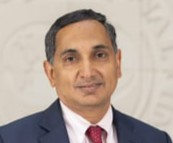
Krishna Srinivasan

Director of the Asia and Pacific Department, IMF


Krishna Srinivasan is the Director of the Asia and Pacific Department (APD). In this capacity, he will oversee the institution’s work on all countries in the Asia-Pacific region. He was previously a Deputy Director in APD, overseeing the work on several systemically important countries, including China and Korea. Prior to that, Krishna was a Deputy Director in the Western Hemisphere Department (WHD), where he oversaw the institution’s work on several countries in the Americas, including Brazil, Canada, Mexico, Peru, Ecuador and the island economies of the Caribbean, the department’s research activities, and its flagship product, Regional Economic Outlook (REO) for Latin America and the Caribbean. He is a co-editor of two recent books: Brazil—Boom, Bust and the Road to Recovery; and Unleashing Growth and Strengthening Resilience in the Caribbean. Before joining WHD, Krishna was the IMF’s mission chief for the United Kingdom and Israel, when he was a staff member of the European Department, and before that in the Research Department, where he led the IMF’s work on the G-20 in the context of the global financial crisis. In the context of this work, he and was the editor of an IMF book Global Rebalancing: A Roadmap for Economic Recovery. Krishna has been with the IMF since 1994 and has served in several departments across the institution. He secured his PhD in International Finance from Indiana University and a Master’s from the Delhi School of Economics, India, and has published several papers both at the IMF and in leading academic journals.

Krishna Srinivasan