The discussion will focus on whether existing macroeconomic policy frameworks—fiscal, monetary, and external sector—remain fit for purpose amid accelerating and overlapping structural transformations related to demographics, climate change, geoeconomic fragmentation, and artificial intelligence. It will explore the economic implications of these trends, including potential effects on growth, the nature and frequency of shocks, the level of natural rates and term premia, and debt sustainability in the face of rising spending pressures. The discussion will then focus on how these developments may affect policy frameworks and available policy space, including monetary-fiscal policy interactions, and possible adjustments needed to ensure that the macro policy toolkit remains fit for purpose in a shock-prone world.
Rethinking Macro Policy Frameworks for a Transforming, Shock Prone World
Thursday, Apr 16, 2026 | 02:30 PM - 03:30 PM
Location: HQ1 Atrium HQ1-1-700
OVERVIEW
MODERATOR
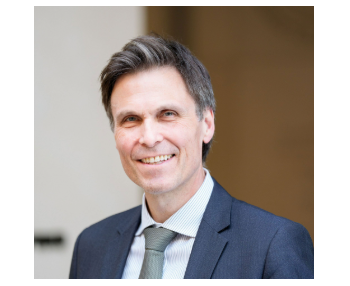
Director of the Strategy, Policy, and Review (SPR) Department, IMF
Read MoreMr. Christian Mumssen is Director of the Strategy, Policy, and Review (SPR) Department of the International Monetary Fund (IMF). In this capacity, he leads the IMF’s work on institutional strategy, policy design, and review of operations. Mr. Mumssen has previously served as Chief of Staff in the Office of the Managing Director, Deputy Director of the Finance Department, and Director of the IMF’s Europe Office in Brussels and Paris. His career spans nearly three decades in international financial institutions, with extensive country experience across low-income, emerging, and advanced economies in Africa, Europe, and the Middle East. Before joining the IMF, Mr. Mumssen was Principal Economist at the European Bank for Reconstruction and Development (EBRD). Mr. Mumssen holds a Master’s in Economics from the London School of Economics and a Doctorate in Economics from the University of Oxford.
PANELISTS
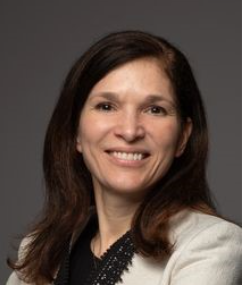
Chief Economist, Inter-American Development Bank
Read MoreLaura Alfaro Maykall is the Chief Economist and Economic Counselor of the Inter-American Development Bank (IDB). She started in this role on June 1, 2025, after taking a leave from Harvard Business School, where she is the Warren Alpert Professor of Business Administration. She served as Minister of National Planning and Economic Policy in Costa Rica from 2010 to 2012. She is Co-Editor of the Journal of International Economics and the World Bank Research Observer, President of the Latin American and Caribbean Economic Association (LACEA), and Faculty Research Associate at the Center for Economic and Policy Research (CEPR) and the National Bureau of Economic Research (NBER). Ms. Alfaro Maykall has authored numerous articles on international economics, capital flows, foreign direct investment (FDI), sovereign debt, and trade. She earned her Ph.D. in Economics from the University of California at Los Angeles (UCLA), where she received the Dissertation Fellowship award. She received a B.A. degree in economics from the Universidad de Costa Rica and a 'Licenciatura' from the Pontificia Universidad Católica of Chile. Ms. Laura Alfaro Maykall is a citizen of Costa Rica and the United States
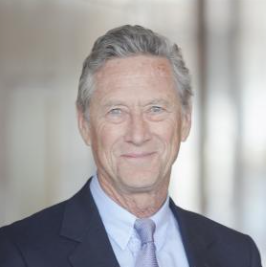
Robert M. Solow Professor of Economics, MIT
Read MoreOlivier Blanchard is the C. Fred Bergsten Senior Fellow at the Peterson Institute for International Economics and the Robert M. Solow Professor of Economics emeritus at the Massachusetts Institute of Technology (MIT). A citizen of France, Blanchard has spent most of his professional life in the United States. After obtaining his PhD in economics from MIT in 1977, he taught at Harvard University and returned to MIT in 1982. He was chair of the economics department from 1998 to 2003. In 2008, he took a leave of absence to serve as economic counsellor and director of the research department at the International Monetary Fund where he stayed until 2015. He then joined the Peterson Institute. Blanchard has worked on a wide set of macroeconomic issues, including the role of monetary and fiscal policy, speculative bubbles, the labor market and determinants of unemployment, economic transition in former communist countries, and the nature of the Global Financial Crisis. In the process, he has worked with numerous countries and international organizations. Blanchard is the author of many books and articles, including two textbooks on macroeconomics, one at the graduate level with Stanley Fischer and the other at the undergraduate level. He is a past editor of the Quarterly Journal of Economics and the NBER Macroeconomics Annual and founding editor of American Economic Journal: Macroeconomics. He is a fellow and former Council member of the Econometric Society, a past president of the American Economic Association, and a member of the American Academy of Arts and Sciences.
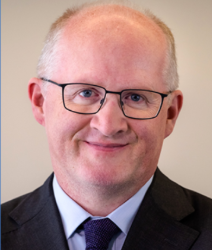
ECB Board, former Governor of the Central Bank of Ireland
Read MorePhilip Lane is the Chief Economist and Member of the Executive Board of the ECB as of June 2019. He previously served as the Governor of the Central Bank of Ireland from 2015 to 2019. Lane was the professor of international macroeconomics and Director of the Institute for International Integration Studies (IIIS) at Trinity College Dublin. He was a research fellow of the Centre for Economic Policy Research and had been a visiting scholar at the International Monetary Fund and the Federal Reserve Bank of New York and a consultant to the European Commission. He is among the "Top 5% of Economists in the World" according to IDEAS/RePEc. He studied at Trinity College Dublin and was elected a scholar in Economic and Social Studies there, before receiving a doctorate in Economics at Harvard University in 1995.
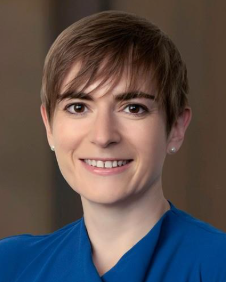
Chief Economist and Assistant Governor (Economic), Reserve Bank of Australia
Read MoreSarah Hunter is the Chief Economist and Assistant Governor (Economic) at the Reserve Bank of Australia, a position she has held since January 2024. In this role, she is responsible for the Bank's Economic Analysis and Economic Research departments and is the chief economic advisor to the Governor and the Board. Before joining the Bank, Sarah was the Head of Macroeconomic Conditions at the Commonwealth Treasury, where she oversaw the analysis of current conditions and economic forecasts and advised the Government on a broad range of economic and policy issues. Prior to that, she helped establish the Americas, Asia Pacific and Australian offices at Oxford Economics, progressing to the role of Chief Economist in Sydney, and was a Partner at KPMG in the Economics and Tax Centre. Sarah holds a DPhil from the University of Oxford, a Masters in Economics degree from the London School of Economics and a Bachelor of Economics degree from the University of Cambridge
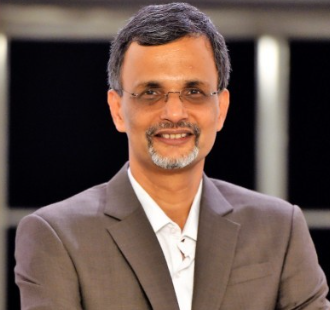
Chief Economic Advisor, Government of India
Read MoreDr. Nageswaran is the Chief Economic Advisor to the Government of India. He is also a writer, author, and a teacher. He has written a weekly Mint column for fifteen years and co-authored four books. He has taught at several business schools and institutes of management in India and in Singapore. He was the Dean of the IFMR Graduate School of Business and a distinguished Visiting Professor of Economics at Krea University. He was one of the founders of Aavishkaar Venture Capital Fund and the Takshashila Institution. He served as a Currency Economist at the Union Bank of Switzerland; Head of Research and Investment Consulting in Credit Suisse Private Banking in Asia; and Head of Asia Research and Global Chief Investment Officer at Bank Julius Baer. He was an independent Director on the Boards of TVS Supply Chain Solutions, Sundaram Fasteners, TVS Sri Chakra Tyres, Delphi TVS and Aparajitha Corporate Services. He received a Post-Graduate Diploma in Management from the Indian Institute of Management, Ahmedabad. He earned his doctoral degree from the University of Massachusetts in Amherst