
Meetings Calendar

Governor Talk: Europe Under Pressure: Securing Growth and Resilience in a More Fragile World

Thursday, Apr 16, 2026 | 01:45 PM - 02:15 PM

Location: Cedar Hall HQ1-1-660

Governor Talks

OVERVIEW

Europe is once again under pressure. A renewed escalation of the war in the Middle East is adding to an already uncertain global environment—driving energy price volatility, complicating the inflation outlook, and testing Europe’s economic resilience. This comes at a time when growth remains subdued, productivity gains are limited, and fiscal space is increasingly constrained. At the same time, Europe faces rising demands: strengthening energy security, financing defense, advancing the green and digital transitions, and maintaining social cohesion. The challenge is no longer how to respond to a single shock—but how to operate in a world of repeated and overlapping shocks. In this Governor’s Talk, Alfred Kammer and Eurogroup President Kyriakos Pierrakakis will discuss how Europe can secure both stronger growth and greater resilience—by deepening integration, strengthening policy frameworks, and making difficult but necessary choices.

Summary

Key Points

·    Response to global uncertainty and the war in the Middle East. Europe is already being affected by renewed geopolitical tensions, with energy markets at the center of the shock. The key challenges are uncertainty and duration, as disruptions—particularly around the Strait of Hormuz—risk prolonging price volatility and complicating the inflation outlook. Policy responses in Europe must therefore balance urgency with prudence, with support measures remaining temporary, targeted, and tailored, while avoiding broad-based interventions that strain limited fiscal space. Compared with earlier crises, Europe is more resilient and better prepared, but higher debt levels, tighter budgets, and rising defense spending reduce room for maneuver. Governments must make difficult intertemporal choices, adapting responses quickly as conditions evolve, and maintaining public trust in their ability to manage repeated and overlapping shocks.

·    Tackling structural challenges. Europe must address long-standing structural weaknesses that limit growth and competitiveness. Advancing the single market and the savings and investment union is critical to unlocking scale, boosting productivity, and allowing firms to grow into global players. Energy security remains a strategic priority: completing a full energy union—through investment in grids, storage, and interconnectors—is essential not only for resilience but also for competitiveness and the green transition. These goals must be pursued alongside financing higher defense needs, supporting digital transformation, and maintaining social cohesion within constrained fiscal frameworks.


Quotes:

“The Middle East shock is already affecting Europe. We are absolutely worried. And the key words are the word ‘uncertainty’ and the word ‘duration’. The impact will be a function of how long the Straits of Hormuz will be closed, how long this crisis will last.” Kyriakos Pierrakakis (03:31-05:36)

“It's interesting that in Greek etymology, the word ‘crisis’ is a synonym of the word ‘judgment’. You need to judge how to optimally address the specific crisis that you have in front of you. And if you look at the oil crisis of the 70s, how we reacted back then, in a sense, produced the world that we have in from of us now.” Kyriakos Pierrakakis (13:06-14:34)
SPEAKERS

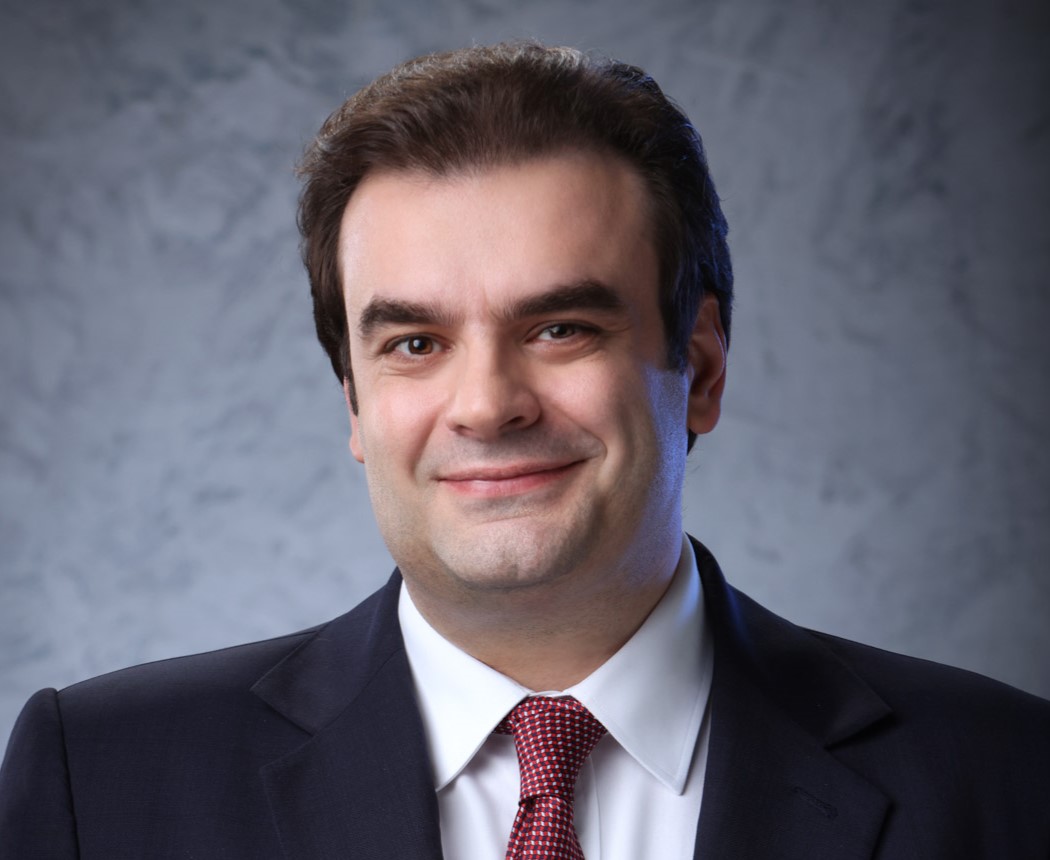
Kyriakos Pierrakakis

President of the Eurogroup, Minister of Economy and Finance of Greece


Kyriakos Pierrakakis is the Minister of Economy and Finance in the Cabinet of Prime Minister Kyriakos Mitsotakis, and also a Member of the Hellenic Parliament. As of 12 December 2025, he has been serving as President of the Eurogroup.


He holds degrees in both computer and political science. He earned a bachelor’s degree in Computer Science from Athens University of Economics and Business, followed by a Master’s in Public Policy from Harvard University’s John F. Kennedy School of Government and a Master of Science in Technology and Policy from the Massachusetts Institute of Technology (MIT).


From 2019 to 2023, as the Minister of Digital Governance, Mr. Pierrakakis implemented significant reforms that transformed the relationship between the state and its citizens. During his tenure, gov.gr, the digital portal for public services, was launched, consolidating over 1,500 new digital services—including the Gov.gr Wallet and the award-winning My Health app—streamlining procedures for millions of citizens and businesses, during the peak of the COVID-19 pandemic.He was appointed Chair of the OECD’s Global Strategy Group Meeting in 2021, a role he was re-appointed to in 2024.


From 2023 to 2025, as the Minister of Education, Religious Affairs and Sports, he led significant legislative reforms to establish a modern, high-quality, and inclusive education system. The Higher Education Bill, which was introduced during his tenure, empowers public universities through institutional and financial support, promotes their internationalization, and regulates the operation of branches of foreign universities. Schools embraced the digital era through initiatives such as the Digital Education Portal and a Digital Tutoring Platform providing educational resources even in the most remote areas of Greece. Moreover, the stop-bullying.gov.gr platform, stricter school regulations, and the “Active Citizen Actions” educational program reflected the Ministry’s firm commitment to improving school safety.


Mr. Pierrakakis was born in 1983 in Athens. He is married with three children. He speaks English and French

Kyriakos Pierrakakis

MODERATOR

Alfred Kammer

Director of the European Department, IMF


Mr. Kammer was previously the Chief of Staff of the Office of the Managing Director, advising the Managing Director on strategic and operational issues and overseeing operations for the senior management team; Deputy Director of the Strategy, Policy and Review Department, overseeing the work on Fund strategy and surveillance policy; Deputy Director of the Middle East and Central Asia Department, overseeing regional economic developments and financial sector issues; Director of the Office of Technical Assistance Management, advising management on technical assistance operations and overseeing fundraising and global partnerships for capacity building; and Advisor to the Deputy Managing Director. Mr. Kammer also served as resident representative of the IMF in Russia. Since joining the IMF, Mr. Kammer worked with countries in Africa, Asia, Europe, and the Middle East, and on a wide range of policy and strategic issues.


Kammer