Key Points
· Ambitious domestic revenue mobilization reforms. Amid multiple crises and tighter financing conditions, Burkina Faso has prioritized domestic revenue mobilization to meet its growing development needs. The authorities have launched a medium‑term tax and customs revenue strategy that has delivered notable results. The strategy rests on five pillars: broadening the tax base, including to cover the large informal sector; modernizing tax administration through digitalization; strengthening governance to enhance credibility and taxpayer trust; mobilizing non‑tax revenues, including strengthening state‑owned enterprises’ operations, dividends and royalties; and improving taxation of high‑value sectors such as mining, telecoms, and banking, notably by strengthening audit capacity.
· Digitalization as a central pillar of the reform agenda. Reforms focus on digitalizing tax and customs processes, including filing, payments, and the phased rollout of e‑invoicing for large, medium and small companies, and eventually the informal sector. Improving the interconnectedness of tax, customs, and treasury systems—while leveraging AI for data analytics and risk‑based control—is expected to reduce leakages and enhance compliance, while digital land registration should improve property tax efficiency.
· Mining sector reforms to capture windfall revenues from increasing gold prices. Burkina Faso has strengthened mining taxation by revising mining conventions, the mining code, and royalty regimes to address stabilization clauses that constrained revenue collection. Given significant transfer‑pricing risks, the authorities are strengthening tax legislation and audit capacity, with technical assistance support, while emphasizing regional coordination to mitigate tax competition and revenue leakages.
Quotes:
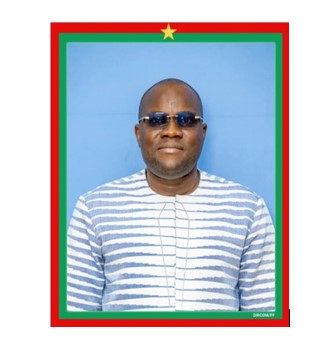
“The issue of domestic revenue mobilization is not merely a technical issue. It's for us a matter of sovereignty, because we need to do our best to finance our development with our own resources. And resources coming from partners should be a support. We should not only rely on these resources. That's why it's important for us to draft a strategy, a strategy to mobilize domestic revenue.” Aboubacar Nacanabo (03:54-04:26)
“I think our tax legislation sometimes are not really adapted. And in the past five years in Burkina Faso, we worked on this to improve the legislation. This is one side, but the other side, even if the legislation is strong, there is also the problem of the capacity of the tax administration staff. That's why we ask for technical assistance from the IMF, to support our tax administration staff to have capacity for transfer pricing audits. And I think for transfer pricing, maybe we need to see at the regional level how we can find a sort of framework where we have a common legislation.” Aboubacar Nacanabo (22:20-23:13)
“I think the experience I got both nationally and internationally has brought to me the conviction that when it comes to reforms, the most important thing is not a well-designed reform. The reform can be very well- designed, but the most the important thing is the implementation. So, it's important when you think about reform [to] think about how you will implement it, how you will measure progress. So, I have a pragmatic approach.” Aboubacar Nacanabo (26:24-27:00)
Contributor: Soha Ismail