Meeting Schedules

How Central Banks Decide—Committee Decision-Making and Communication in an Era of Uncertainty

|

Location: G-01

How Central Banks Decide—Committee Decision-Making and Communication in an Era of Uncertainty

Overview

Monetary policy decisions are made in an increasingly complex and uncertain environment, underlining the importance of how central bank committees deliberate, reach decisions, and communicate with the public. Committee structures vary widely across institutions. Some rely on large policymaking bodies representing regional interests, while others operate through smaller committees. Some emphasize consensus, while others are designed to surface a divergence of views. Central banks also differ in the role accorded to staff, the influence of the chair, and the degree of transparency around deliberations, forecasts, and votes. Moderated by the First Deputy Managing Director, Dan Katz, this seminar will bring together leading central bankers to compare different approaches to committee governance and communication. The discussion will explore how institutional design shapes decision-making, how committees balance diversity of views with coherent policy signals, and what lessons can be drawn for effective monetary policy communication in an increasingly uncertain world.
Panelists

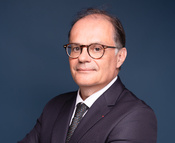
Emmanuel Moulin

Governor of the Banque de France


Emmanuel Moulin joined the French Treasury in 1996. He was appointed Alternate Director of the World Bank in Washington in 2000 before becoming Secretary General of the Paris Club in 2003. In 2006, he became senior banker at Citigroup. In 2007, he was appointed Deputy Chief of Staff to Christine Lagarde, Minister of Economy. He joined the Presidency of the Republic in June 2009 as economic advisor. In May 2012, he joined the Eurotunnel group as Deputy CEO. In February 2015, he became Managing Director of the investment bank Mediobanca. He has been Chief of Staff to the Minister of the Economy from May 2017 to November 2020 when he was appointed Director General of the Treasury. In January 2024, he was appointed Chief of Staff to Prime minister. In April 2025, he was appointed Secretary general of the presidency. In May 2026, he was appointed Governor of the Banque de France. He graduated from ENA in 1996. He also holds a degree from Sciences-Po, Essec and University Paris II.

Emmanuel Moulin

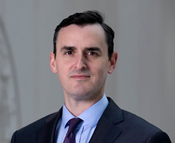
Martin Schlegel

Chairman, Governing Board of the Swiss National Bank


Martin Schlegel is Chairman of the Governing Board of the Swiss National Bank (SNB). He graduated in economics from the University of Zurich in 2003 and received his doctorate from the University of Basel in 2009. Since joining the SNB in 2003 he has held multiple positions, including Head of Foreign Exchange and Gold. The Federal Council appointed him Member of the SNB’s Governing Board in 2018, Vice Chairman in 2022, and Chairman of the Governing Board in 2024. He is Governor of the International Monetary Fund (IMF) for Switzerland and a member of the Board of Directors of the Bank for International Settlements (BIS) in Basel. He represents Switzerland in the Plenary and the Steering Committee of the Financial Stability Board (FSB), and is Chair of the FSB’s Standing Committee on Budget and Resources (SCBR). In 2024, Martin Schlegel was elected Chairman of the Foundation Board of the International Center for Monetary and Banking Studies (ICMB) in Geneva.

Martin Schlegel

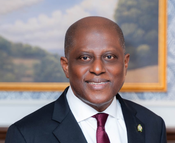
Olayemi Cardoso

Governor, Central Bank of Nigeria


Olayemi Cardoso has served as Governor of the Central Bank of Nigeria since September 2023, leading one of Africa’s most systemically important central banks through a far-reaching programme of monetary, financial sector and institutional reform aimed at restoring macroeconomic stability, strengthening policy credibility and rebuilding investor confidence.

Under his leadership, the Central Bank has implemented significant reforms to Nigeria’s foreign exchange market, cleared longstanding foreign exchange obligations, strengthened monetary policy transmission, enhanced institutional governance and transparency, and successfully concluded the recapitalisation of the banking sector to reinforce the resilience and capacity of Nigeria’s financial system.

Governor Cardoso is an active participant in global policy dialogue on monetary policy, financial stability and economic governance, working closely with international financial institutions, fellow central bank governors and private-sector leaders to advance sustainable economic growth and strengthen Nigeria’s engagement in the global financial system.

His leadership has earned international recognition, including the 2025 African Banker Central Bank Governor of the Year Award and the 2026 Central Bank of the Year Award presented by Central Banking, recognising the Central Bank of Nigeria’s institutional achievements under his stewardship.

Before his appointment as Governor, Cardoso built a distinguished career spanning international banking, investment management and public service, including serving as Chairman of Citibank Nigeria and Commissioner for Economic Planning and Budget in Lagos State. He holds a degree from Aston University, United Kingdom, and a master’s degree in public administration from the Harvard Kennedy School, where he also served on the Harvard Kennedy School Alumni Board. He continues to champion reforms that strengthen monetary and financial stability, reinforce institutional credibility, and position Nigeria as a resilient, competitive and globally respected economy.

Olayemi Cardoso

Dan Katz (Moderator)

First Deputy Managing Director, IMF


Dan Katz assumed the position of First Deputy Managing Director of the IMF on October 6, 2025. Mr. Katz most recently served as Chief of Staff at the United States Department of the Treasury. He was the principal advisor to the Secretary of the Treasury on a wide range of domestic and international matters, including on some of the most consequential international economic issues involving the United States. Mr. Katz has over a decade-long association with the Treasury, serving as Senior Advisor to the Under Secretary for International Affairs, Counselor to the Assistant Secretary for International Markets, and Policy Advisor in the Office of Terrorism and Financial Intelligence. In addition to his work at the Treasury, Mr. Katz spent several years in the private sector, where he worked at a global macro hedge fund, and as an investment banker at Goldman Sachs. He was also a senior fellow at the Manhattan Institute, focusing on central banking, international economic issues, and economic statecraft, and served as an advisor to the Commander of U.S. forces in Kabul, Afghanistan. Mr. Katz received a Bachelor of Arts from Yale University and a Juris Doctor magna cum laude from New York University School of Law.

Dan Katz